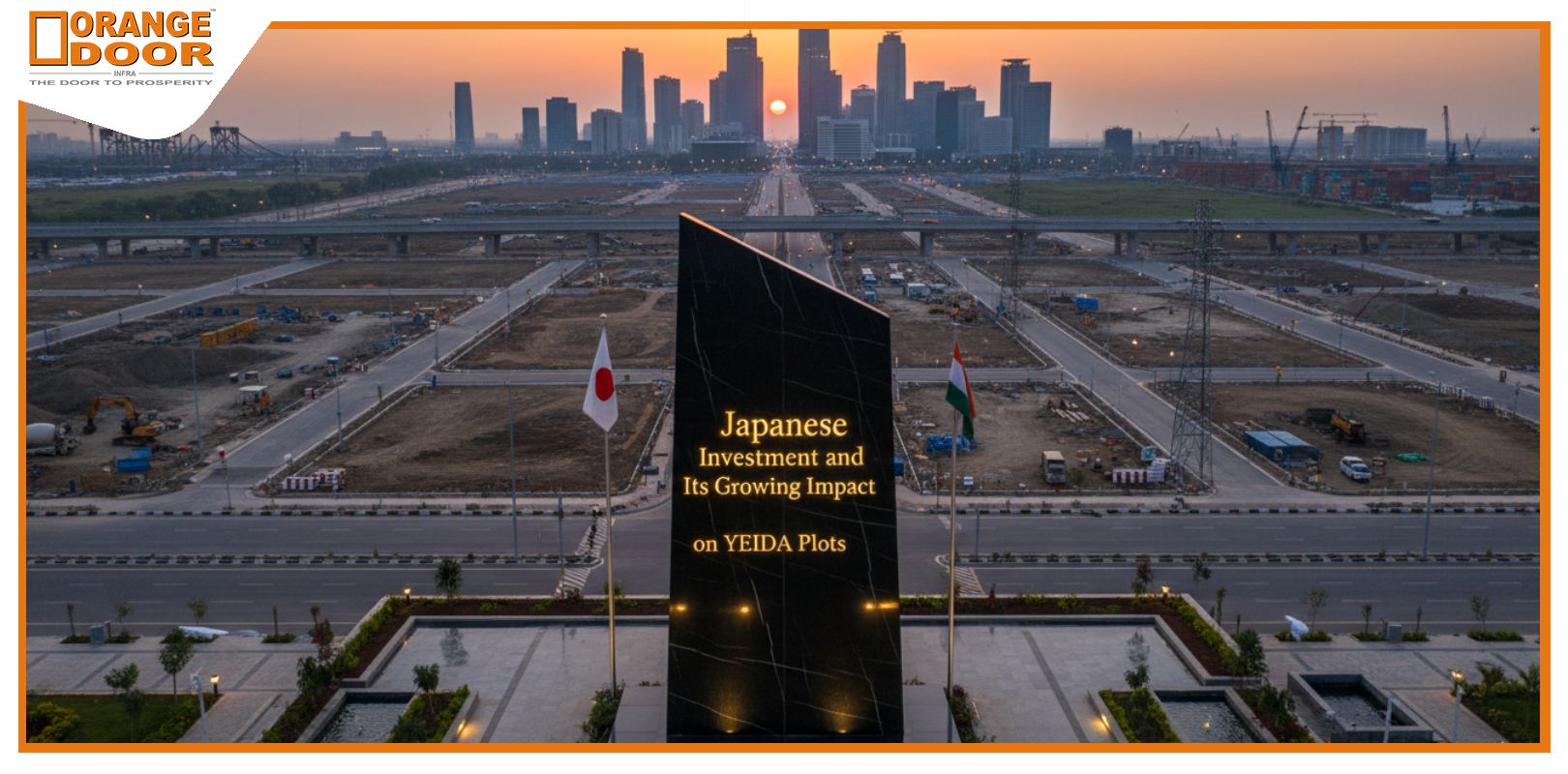
The rapidly emerging YEIDA area, particularly around Yamuna City and the proposed Noida International Airport, now awaits a new wave of economic expansion, with interest in Japanese investments gaining pace. The YEIDA has been vigorously promoting the notion of a special “Japanese City,” where industries and housing are integrated.
This article explores the potential impact of Japanese investment on the future of YEIDA plots, potentially transforming this region into a global industrial and residential hub.
The Japanese City is an industrial and residential area planned for Sector 5A, Yamuna City, measuring approximately 395 hectares. The YEIDA is holding discussions with the Japan External Trade Organization (JETRO) to promote investment opportunities in the following sectors -
The objective is to develop not only factories, but the entire ecosystem of housing, schools, hospitals, and lifestyle amenities, so it becomes a place of interest to professionals and businesses from Japan.
Japan is famous for its advanced manufacturing, automotive excellence, and strong technology ecosystem. YEIDA's strategy includes:
This approach endeavors to reduce investment risk and quicken the decision-making process by Japanese firms in finding emerging business opportunities in India.
There are a number of advantages the YEIDA area affords Japanese corporations.
The proposed international airport at Noida, near Yamuna City, would increase international connectivity and facilitate trade and talent movement.
YEIDA is setting up not only industrial estates but also:
A delegation from the YEIDA visited the Japanese industrial area in Neemrana, Rajasthan, to learn from their effective land use policies, zoning regulations, and infrastructure norms, which make their industries an attraction for businesses across the entire world. Such exposure will come in handy in crafting a competitive model for Samaj City.
Japanese companies' interest is likely to increase the demand for YEIDA plots, especially those lying near Japanese cities and industrial clusters. This may lead to -
YEIDA is gathering feedback on land use and plot sizes preferred by investors. Making this data part of the final project plan ensures flexibility in the land allocation strategy to suit global industry standards.
Sectors that were identified during stakeholder meetings to which possible investment could be given are -
These industries match very well with the strengths of Japanese corporations and thus make this region very compatible.
According to industry analysts, this could be the basic reason behind international interest, especially from Japan, which may position YEIDA as a global industrial-residential growth corridor. World-class infrastructure planning, government support, and global connectivity—together—can make this future trajectory happen for the region.
The interest displayed by the Japanese investors is the beginning of a new phase of growth for the YEIDA region. The YEIDA region, because of its ideal location in the vicinity of the proposed Jewar Airport, has been positioned to be a magnet for international players.
A Japanese city, if successful, would not only be able to increase the value of YEIDA plots but would also be able to trigger growth and jobs—infrastructure development in a number of sectors, changing the future of Yamuna City.
Q1. Where will the Japanese city be built?
Ans: The Japanese City is proposed to come up on approximately 395 hectares of land in Sector 5A of Yamuna City.
Q2. What industries are targeted for investment?
Ans: Industries such as artificial intelligence, semiconductors, green hydrogen, solar power, and automobiles are being identified as key sectors for investment.
Q3. How will Japanese investment help YEIDA plots?
Ans: Foreign investments will help in increasing the demand and value of the plots due to the boosting of industry development.
Q4. Is it an industrial project only?
Ans: No. The development comprises housing, educational, and social infrastructure to enable a complete lifestyle.



Comments